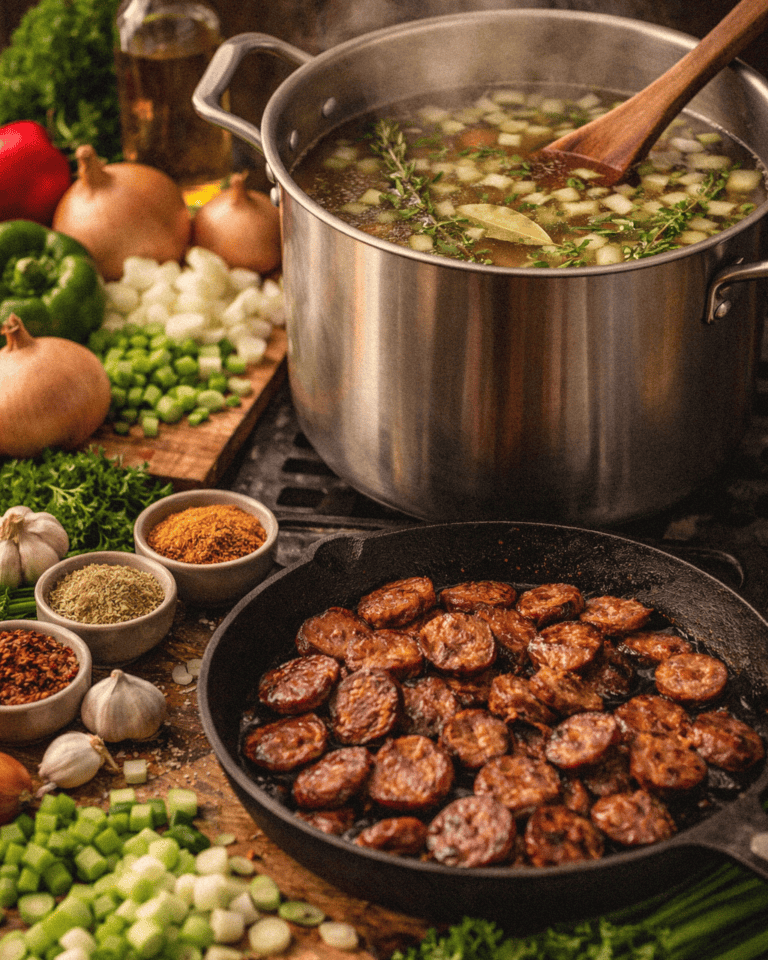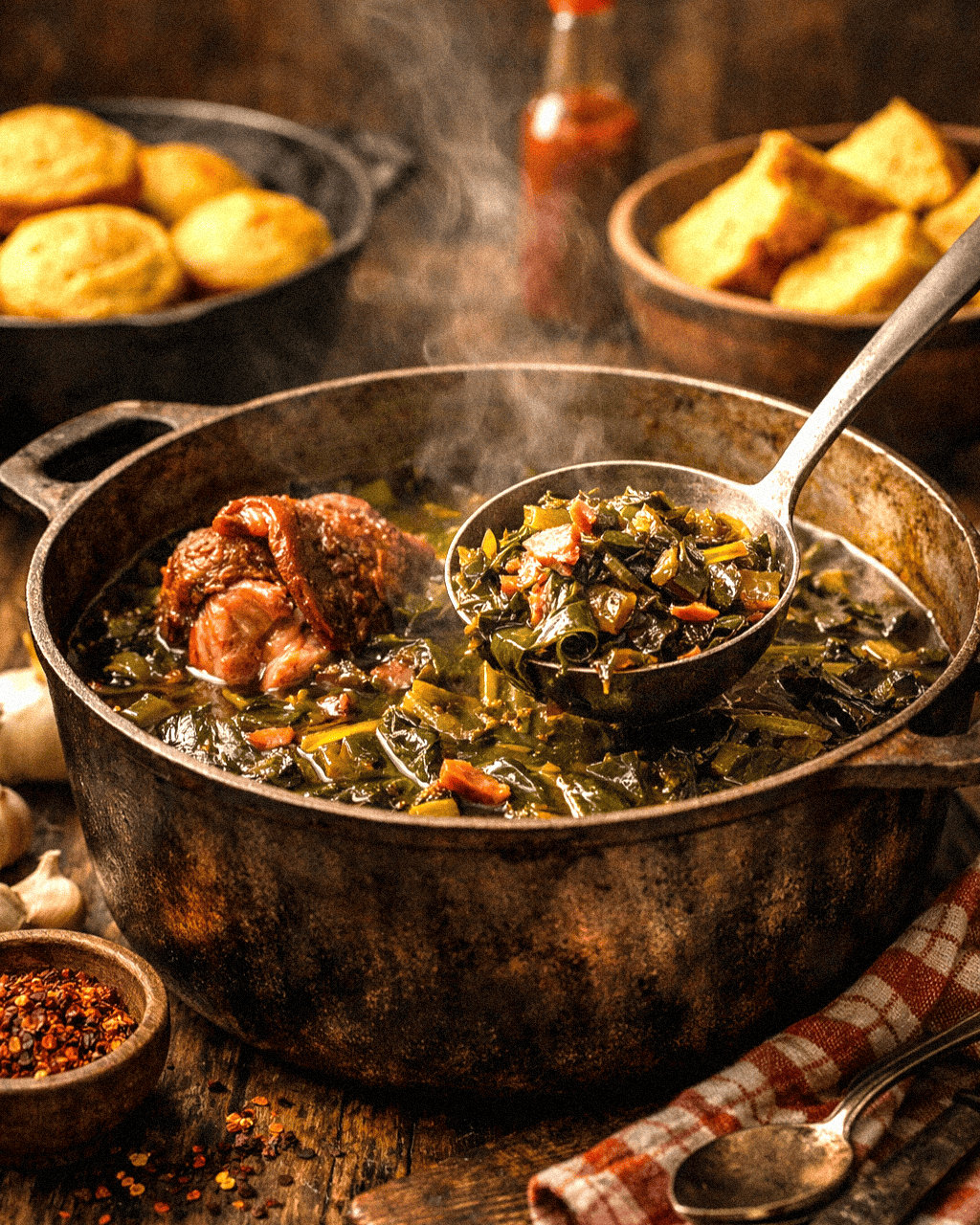
Southern Collard Greens Recipe (Louisiana-Style)
Collard greens are a Southern comfort food classic, known for their rich flavor, tender texture, and deep roots in Southern and Louisiana cooking. Slow-simmered with smoky meat, onions, garlic, and seasonings, these hearty greens develop a savory broth often referred to as “pot likker” that is just as flavorful as the greens themselves. Whether served alongside fried chicken, smoked sausage, cornbread, or a holiday feast, collard greens have been a staple on family tables for generations. This easy Southern collard greens recipe delivers bold, comforting flavor and the traditional taste that makes this dish a favorite throughout Louisiana and the South.
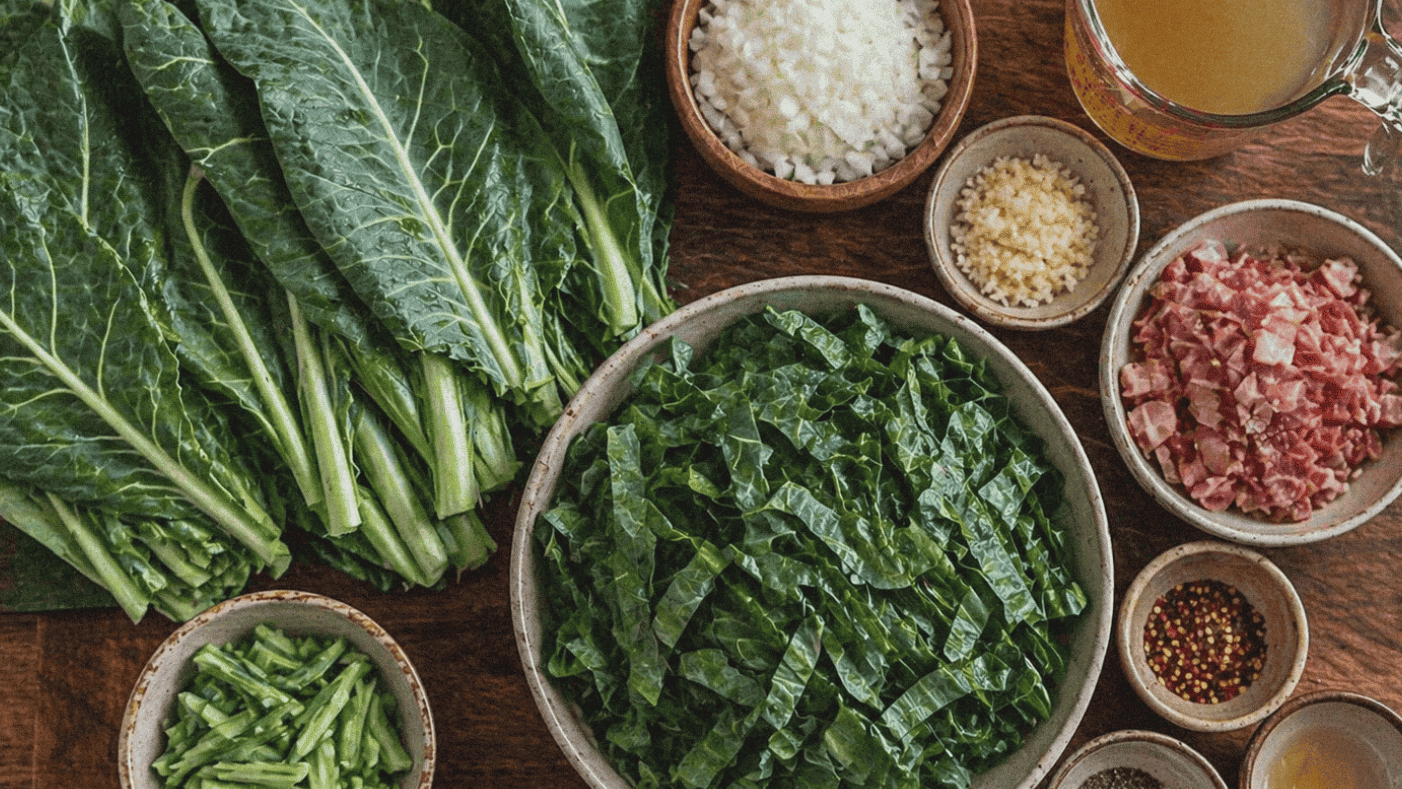
Ingredients
- 2 large bunches fresh collard greens
- 2 tablespoons vegetable oil or bacon grease
- 1 medium yellow onion, diced
- 3 cloves garlic, minced
- 6–8 oz smoked meat (ham hock, smoked ham, or smoked turkey)
- 4 cups chicken broth or water
- 1 tablespoon apple cider vinegar
- 1 teaspoon sugar (optional)
- 1 teaspoon salt, plus more to taste
- ½ teaspoon black pepper
- ½ teaspoon crushed red pepper flakes (optional)
How to Clean Collard Greens
Cleaning collard greens properly is essential because the leaves often hold dirt and grit.
First, remove the thick stems and discard them. Next, stack the leaves, roll them tightly, and slice them into ribbons. Place the sliced greens in a large bowl of cold water and swish them around to loosen any dirt. Then drain the water and repeat the process until the water runs clean and no grit remains. Finally, set the greens aside while you prepare the pot.
Cooking Instructions
Heat the oil or bacon grease in a large pot or Dutch oven over medium heat. Once hot, add the diced onion and cook for 4–5 minutes until softened. Then stir in the garlic and cook for about 30 seconds until fragrant.
Next, add the smoked meat and cook for another 2–3 minutes. This step helps release additional flavor into the pot. Afterward, begin adding the collard greens a handful at a time, stirring as they wilt.
Once the greens have softened, pour in the chicken broth. Then add the salt, black pepper, crushed red pepper flakes, and sugar if using. Bring everything to a gentle boil.
Reduce the heat to low, cover, and simmer for 45–60 minutes. During cooking, stir occasionally to ensure even flavor throughout the pot. As the greens cook, they become tender and absorb the rich smoky flavor from the broth and meat.
During the final 5 minutes, stir in the apple cider vinegar. Finally, taste and adjust the seasoning before serving.
Serving Suggestions
Serve these Southern collard greens alongside:
- Cornbread or buttered French bread
- Fried chicken
- Smothered pork chops
- Smoked sausage
- Red beans and rice
- Black-eyed peas
Most importantly, don’t throw away the pot liquor. Many Louisiana cooks consider it the best part of the dish.
Tips for Authentic Southern Flavor
- Simmer the greens longer for deeper flavor.
- Use bacon grease for extra richness.
- Substitute smoked turkey for a lighter option.
- Add a splash of hot sauce before serving.
- Taste before serving and adjust seasoning as needed.
- Let leftovers sit overnight for even better flavor the next day.
Common Mistakes to Avoid
- Skipping the washing process and leaving grit behind
- Cooking the greens too quickly
- Under-seasoning the broth
- Using too little liquid during cooking
- Adding vinegar too early
- Throwing away the flavorful pot liquor
Storage & Reheating
Store leftover collard greens in an airtight container in the refrigerator for up to 4 days.
When reheating, warm them slowly on the stovetop or in the microwave. If needed, add a splash of broth to restore moisture and flavor.
Why This Dish Matters
Collard greens have deep roots in Southern and Louisiana food culture. For generations, families have passed down recipes that transform simple ingredients into something comforting and memorable.
Today, collard greens remain a staple at Sunday dinners, holiday gatherings, and family celebrations throughout the South. Beyond their flavor, they represent tradition, resilience, and the shared food culture that connects generations.
Frequently Asked Questions
Do collard greens need to be soaked before cooking?
Not necessarily. However, you should wash them thoroughly several times to remove any dirt or grit hidden in the leaves.
How long should collard greens cook?
Most collard greens need 45–60 minutes to become tender. Some cooks prefer simmering them even longer for deeper flavor.
What meat is best for collard greens?
Ham hocks, smoked ham, and smoked turkey are all popular choices. Each adds a different level of smokiness and richness.
Why add vinegar to collard greens?
Vinegar brightens the flavor and helps balance the natural bitterness of the greens.
Can collard greens be frozen?
Yes. Cooked collard greens freeze well for up to 3 months when stored in airtight containers.
Related Articles
Louisiana Cornbread Recipe – The perfect side dish for soaking up every drop of flavorful pot liquor.
Louisiana Red Beans and Rice Recipe – Another Southern staple that pairs beautifully with slow-cooked greens.
Southern Buttermilk Biscuits Recipe – Flaky homemade biscuits that complement hearty Louisiana meals.
The Holy Trinity of Louisiana Cooking – Learn about the onion, celery, and bell pepper base that builds flavor in countless Southern dishes.
Final Thoughts
Southern collard greens prove that simple ingredients can create incredible flavor. With smoky meat, slow cooking, and a few pantry staples, this dish delivers the comforting taste that has made it a Louisiana and Southern favorite for generations.
Whether you’re serving them alongside fried chicken, cornbread, or a holiday meal, collard greens bring tradition and flavor to the table. Take your time, season well, and let the pot do the work. The result is a classic Southern side dish that’s always worth the wait.