The Myth of Purging Crawfish Before Boiling
If you’ve ever been to a Louisiana crawfish boil, you’ve probably heard someone say, “You gotta purge ‘em with salt first!” It’s one of those old-school traditions that’s been passed down through generations — but is it really necessary?
Let’s dive into what “purging crawfish” actually means, what Louisiana experts say, and how to clean your crawfish the right way before your next boil.
What Does “Purging Crawfish” Mean?
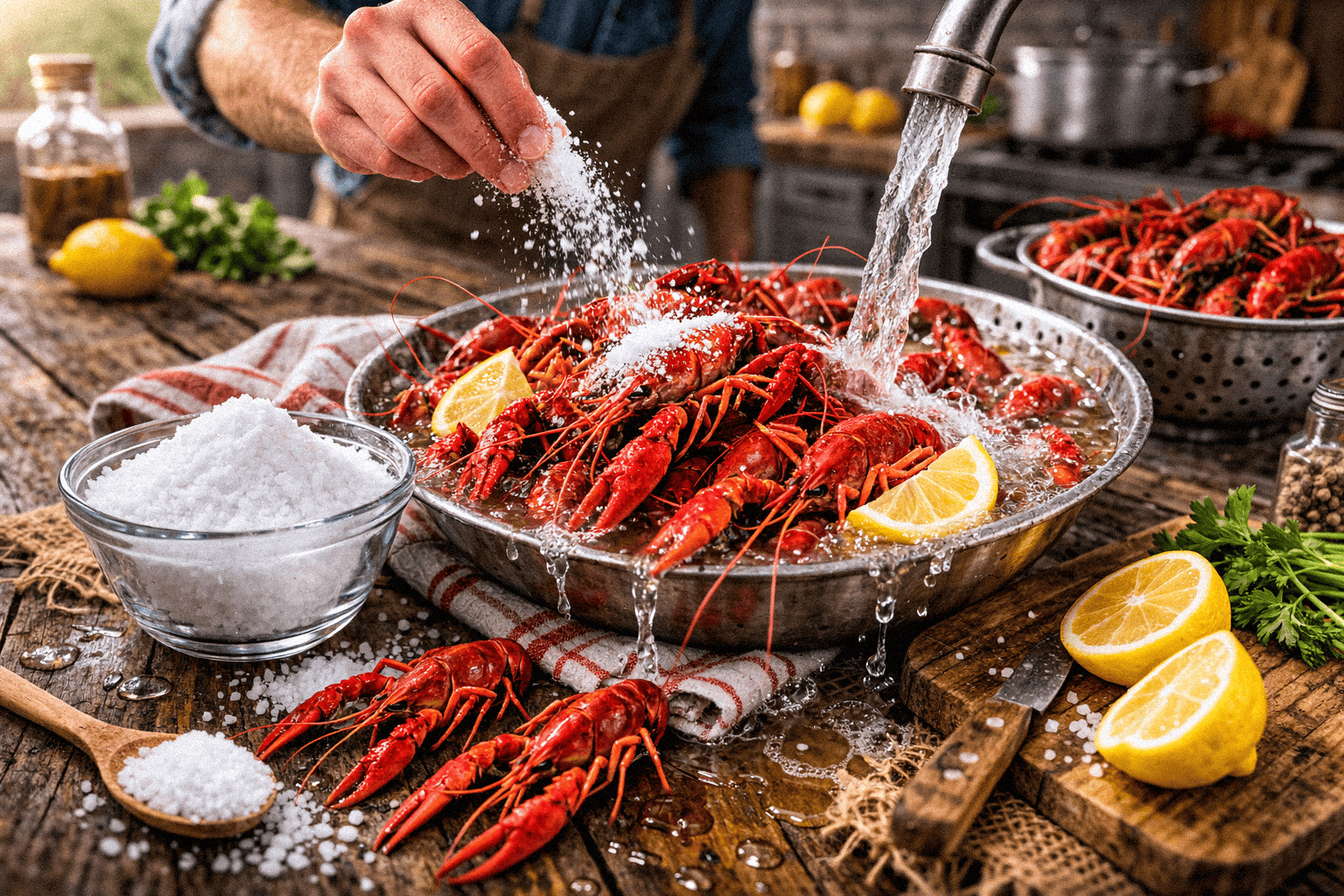
In Louisiana, “purging crawfish” usually refers to soaking live crawfish in salt water before cooking. Many people believe this process cleans the crawfish internally, removes mud, and improves flavor.
Traditionally, people claim purging helps:
- Clean mud and grit from crawfish
- Remove waste from the digestive tract
- Improve texture
- Improve flavor
However, modern research tells a different story.
What the Research Says About Purging Crawfish
According to research from the LSU AgCenter, salt purging does not clean crawfish internally.
Once crawfish leave their natural environment, they stop feeding and digesting normally. As a result, soaking them in salt water does not force them to “clean themselves out” the way many people believe.
Researchers found that:
- Salt does not clean the digestive tract
- Crawfish do not actively purge waste after harvest
- Salt water can stress crawfish
- Excessive salt exposure can kill crawfish before cooking
Because freshness directly affects flavor and texture, keeping crawfish alive until cooking remains the best approach.
Does Salt Actually Clean Crawfish?
No. Despite decades of backyard boil traditions, salt does not clean crawfish internally.
In fact, using salt can create additional problems.
What Salt Does Not Do
- Remove mud from the digestive tract
- Clean the tail meat
- Improve flavor
- Remove the so-called mud vein
What Salt Can Do
- Stress crawfish
- Kill crawfish before boiling
- Reduce freshness
- Lead to softer texture
Therefore, most modern crawfish experts recommend skipping the salt entirely.
The Proper Way to Clean Crawfish
Fortunately, cleaning crawfish correctly is simple.
Rather than using salt, focus on rinsing thoroughly with clean water.
Proper Crawfish Cleaning Steps
- Place live crawfish in a large cooler, tub, or wash basket.
- Fill with clean, fresh water.
- Gently stir the crawfish to loosen mud and debris.
- Drain the dirty water.
- Repeat the process until the water runs mostly clear.
- Remove any dead crawfish before cooking.
- Keep crawfish alive until it’s time to boil.
This method removes mud, grass, and debris without harming the crawfish.
What About the Mud Vein?
Many people point to the so-called mud vein as evidence that crawfish need purging.
However, the mud vein is not harmful and does not disappear through salt purging.
More importantly, proper cooking and seasoning eliminate most concerns about flavor.
Great-tasting crawfish come from:
- Fresh live crawfish
- Proper cleaning
- Correct boil technique
- Adequate seasoning
- Proper soak times
Because of that, the quality of your boil matters far more than whether you salt-purged the crawfish.
Why the Purging Myth Refuses to Die
Louisiana cooking traditions run deep.
For generations, families passed down crawfish boil methods that included salt purging. As a result, many people continue the practice simply because it’s how they learned.
However, tradition doesn’t always equal effectiveness.
Today, more Louisiana cooks follow research-backed methods and focus on proper rinsing instead of salt purging.
Consequently, many experienced crawfish boilers now skip the salt altogether.
The Best Way to Prepare Crawfish for a Boil
Before adding crawfish to the pot, sort through the sack and remove any dead crawfish, along with sticks, grass, or other debris. Rinse the live crawfish several times with clean, fresh water, gently stirring them between rinses until the water runs mostly clear. There’s no need to add salt, as it doesn’t effectively purge the crawfish and can actually stress or kill them. Once they’re clean, cook them as soon as possible to ensure the freshest flavor and best texture. Proper preparation starts with a thorough rinse—not a salt purge.
If your goal is flavorful crawfish, focus on the fundamentals.
Do This
- Rinse with clean water
- Remove dead crawfish
- Keep crawfish alive until cooking
- Use quality boil seasoning
- Follow proper boil and soak times
Avoid This
- Salt purging
- Long soaking periods
- Cooking dead crawfish
- Overcooking
- Weak seasoning
When you focus on the basics, the results speak for themselves.
Common Crawfish Cleaning Myths
Myth: Salt Purges the Digestive Tract – Research shows crawfish do not actively purge their digestive systems after harvest.
Myth: Salt Improves Flavor – Freshness and seasoning affect flavor far more than salt purging.
Myth: Salt Removes the Mud Vein – Salt does not remove the digestive tract.
Myth: Every Louisiana Cook Purges Crawfish – Many experienced crawfish cooks now skip salt entirely.
Frequently Asked Questions
Should you purge crawfish with salt?
No. Research indicates salt does not effectively clean crawfish and may actually stress or kill them.
What is the best way to clean crawfish?
Rinse them several times in clean, fresh water until most debris and mud are removed.
Does salt improve crawfish flavor?
No. Proper seasoning, freshness, and cooking technique have a much greater impact on flavor.
Can salt kill crawfish before cooking?
Yes. Excessive salt exposure can stress or kill crawfish, which may negatively affect quality.
Do commercial crawfish farmers purge crawfish?
Most commercial operations rely on proper handling and clean water systems rather than salt purging.
Related Articles
- Louisiana Crawfish Boil Recipe – Learn the traditional method for boiling crawfish the Louisiana way.
- Crawfish Boil Calculator – Calculate seasoning, crawfish, and side ingredient quantities for any size gathering.
- Catching Crawfish in Louisiana: Complete Guide – Learn when, where, and how to catch crawfish throughout Louisiana.
- History of Crawfish in Louisiana – Discover how crawfish became one of Louisiana’s most iconic foods.
- Crawfish Étouffée Recipe – Turn fresh crawfish into one of Louisiana’s most beloved dishes.
Final Thoughts
For years, Louisiana cooks debated whether salt purging improved crawfish. However, research and practical experience continue to point toward the same conclusion: clean water works better. Instead of stressing crawfish with salt, rinse them thoroughly, keep them alive until cooking, and focus on building a flavorful boil. Ultimately, fresh crawfish, proper seasoning, and good company matter far more than any purging ritual ever will.