The Ultimate Louisiana Sausage Making Guide
Louisiana sausage making is more than just a cooking tradition—it’s a way of life passed down through generations of Cajun and Creole families. From smoky andouille and spicy hot sausage to homemade deer sausage packed with bold seasonings, Louisiana has built a reputation for producing some of the most flavorful sausages in the country. In this ultimate Louisiana sausage making guide, you’ll learn everything from selecting the right cuts of meat and grinding techniques to seasoning blends, casing preparation, smoking methods, and food safety tips. Whether you’re making your first batch in the backyard or looking to perfect a family recipe, this guide will help you create authentic Louisiana sausage packed with the rich flavors and traditions of the Bayou State.
One of the keys to making great Louisiana sausage is understanding the proper meat-to-fat ratios, seasoning levels, and when to use curing salts. Most traditional fresh sausages benefit from a ratio of about 75-80% lean meat to 20-25% fat, helping create the juicy texture that Louisiana sausage is known for. Smoked sausages such as andouille often require curing salt to maintain color, improve flavor, and ensure food safety during the smoking process. This guide also covers grinding techniques, mixing methods, stuffing tips, smoking temperatures, and common mistakes to avoid so you can consistently produce flavorful homemade sausage whether you’re working with pork, venison, beef, wild game, or a combination of meats.
Choosing the Right Meat
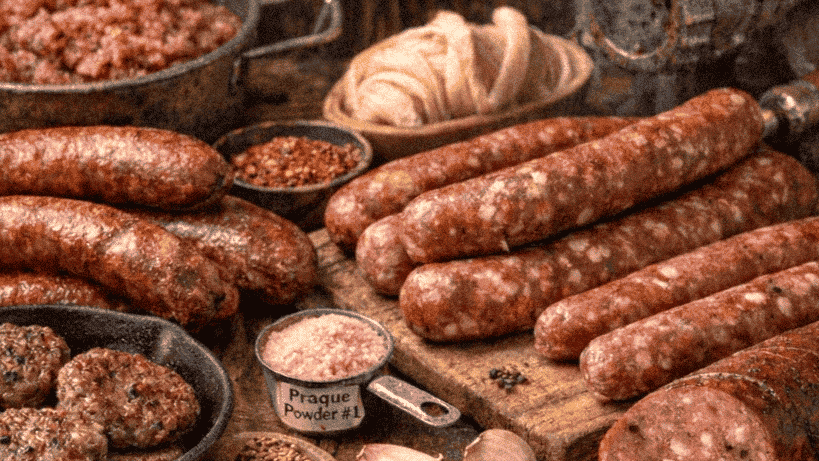
Every great sausage starts with the right cut of meat. While seasoning and smoking matter, the meat-to-fat ratio ultimately determines texture, moisture, and flavor.
Best Cuts for Sausage
- Pork shoulder (Boston butt) – The ideal balance of lean meat and fat
- Pork belly or fatback – Adds moisture and richness
- Venison (deer) – Lean and flavorful but requires added fat
- Beef chuck – Commonly used in beef sausage and summer sausage
Recommended Fat Ratios
- Fresh sausage: 70–75% lean / 25–30% fat
- Smoked sausage: 70% lean / 30% fat
- Venison sausage: 50% venison / 50% pork (minimum 60/40)
- Bratwurst: 70% pork / 30% fat
- Italian sausage: 75% pork / 25% fat
Simply put, fat equals flavor. Without enough fat, sausage becomes dry and crumbly.
Coarse vs. Fine Grind
The grind size dramatically affects texture and mouthfeel.
Coarse Grind
- Rustic bite
- Traditional texture
- Ideal for andouille, bratwurst, and venison sausage
- Excellent for smoking
Fine Grind
- Smoother texture
- Better for breakfast sausage
- Creates a tighter bind
- More uniform consistency
Pro Tip
For many homemade sausages, grind once through a coarse plate and then once through a finer plate. This approach provides the perfect balance of texture and bind.
Choosing the Right Casings
Casings help define the final texture and appearance of sausage.
Natural Hog Casings
- Traditional snap
- Best for smoked sausage, bratwurst, and Italian sausage
- Soak 30–60 minutes before use
Collagen Casings
- Easier to handle
- Consistent sizing
- Great for beginners
No Casings
- Perfect for breakfast sausage
- Ideal for patties or bulk sausage
Understanding Curing Salts
Whenever you smoke sausage below 200°F, curing salt becomes essential for safety.
Prague Powder #1
- Contains sodium nitrite
- Prevents botulism
- Helps preserve color
- Improves shelf life
Proper Ratio
- 1 level teaspoon per 5 pounds of meat
Most importantly, measure curing salt carefully. Never estimate.
Do not use curing salt in fresh sausage recipes.
Smoked vs. Fresh Sausage
Not every sausage requires smoke.
Fresh Sausage
- No curing salt required
- Cook to 160°F internal temperature
- Refrigerated shelf life of 2–3 days
Hot-Smoked Sausage
- Smoker temperature: 160–180°F
- Internal temperature: 155°F
- Requires curing salt
- Fully cooked during smoking
Cold-Smoked Sausage
- Smoker temperature: 70–90°F
- Adds smoke flavor only
- Requires curing and later cooking
- More advanced technique
For most home sausage makers, hot smoking offers the safest and easiest approach.
Mixing and Temperature Control
Temperature control separates average sausage from great sausage.
Follow these rules when grinding:
- Keep meat below 40°F
- Chill grinder parts before use
- Add approximately ¼ cup ice water per 5 pounds
- Mix until the meat becomes tacky
- Always test-fry a small patty before stuffing
Cold meat creates cleaner grinds, stronger protein extraction, and a better final texture.
Classic Cajun Smoked Deer Sausage
For many Louisiana hunters, making deer sausage is just as much a tradition as the hunt itself. After a successful season, families gather to process their venison into everything from smoked sausage and jalapeño cheddar links to breakfast sausage and summer sausage. It’s a great way to make the most of your harvest while enjoying quality time with family and friends. With the right meat-to-fat ratio, quality seasonings, and proper technique, you can turn your venison into flavorful sausage that’s every bit as rewarding as the hunt that brought it to the table.
Venison produces excellent sausage when blended with enough pork fat.
Meat Ratio (10 Pounds)
- 5 pounds venison
- 5 pounds pork shoulder
Seasoning Blend
- 5 tablespoons kosher salt
- 3 tablespoons coarse black pepper
- 1½ tablespoons cayenne pepper
- 2 tablespoons paprika
- 2 tablespoons garlic powder
- 1 tablespoon onion powder
- 1 tablespoon dried thyme
- 2 teaspoons Prague Powder #1
- ½ cup ice water
Instructions
- Cube and chill the meat thoroughly.
- Grind once coarse and once fine.
- Add seasonings and ice water.
- Mix until tacky and sticky.
- Stuff into hog casings.
- Refrigerate overnight before smoking.
Smoking Instructions
- Start smoker at 165°F
- Gradually increase to 180°F
- Smoke until internal temperature reaches 155°F
- Typically requires 3–5 hours
Popular Deer Sausage Variations
Green Onion Deer Sausage
- Add 1 cup chopped green onions per 5 pounds
Jalapeño Deer Sausage
- Add ½–1 cup diced jalapeños per 5 pounds
Jalapeño Cheddar Deer Sausage
- Add 1 cup diced jalapeños
- Add 1–1½ cups high-temperature cheddar cheese
Maple Breakfast Deer Sausage
- Add ¼ cup maple syrup
- Add 1 tablespoon sage
- Add 1 teaspoon nutmeg
- Reduce cayenne slightly
- Cook to 160°F internal temperature
Andouille Sausage
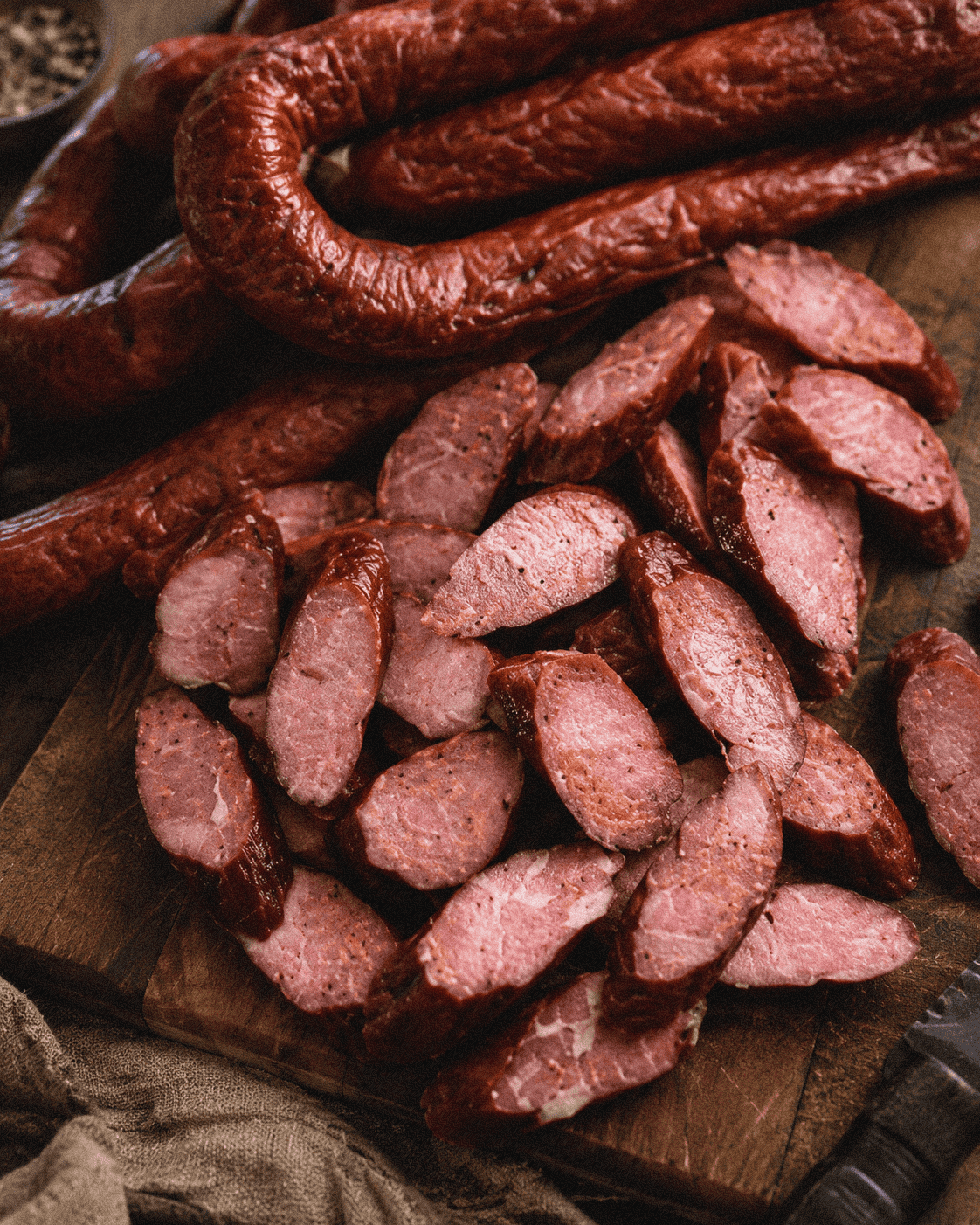
Andouille sausage is one of Louisiana’s most iconic smoked sausages, prized for its bold seasoning, coarse texture, and rich smoky flavor. Traditionally made with pork, garlic, black pepper, cayenne, and other Cajun spices, it’s a staple ingredient in dishes like gumbo, jambalaya, red beans and rice, and étouffée. While store-bought andouille is widely available, making it at home lets you control the seasoning, smoke level, and meat quality, resulting in a sausage that’s packed with authentic Louisiana flavor.
Few sausages represent Louisiana better than andouille.
Meat Ratio
- 70% pork shoulder
- 30% pork fat
Seasoning Blend (Per 5 Pounds)
- 3 tablespoons salt
- 2 tablespoons black pepper
- 1 tablespoon cayenne
- 2 tablespoons paprika
- 1 tablespoon garlic powder
- 1 teaspoon thyme
- 1 teaspoon Prague Powder #1
Smoke at 160–175°F until internal temperature reaches 155°F.
Italian Sausage
Italian sausage relies on herbs and fennel rather than smoke.
Meat Ratio
- 75% pork
- 25% fat
Sweet Italian Seasoning
- 2½ tablespoons salt
- 2 tablespoons fennel seed
- 1 tablespoon paprika
- 1 tablespoon garlic powder
- 1 teaspoon sugar
Hot Italian Additions
- 1 tablespoon crushed red pepper
- 1 teaspoon cayenne pepper
Cook to 160°F internal temperature.
Breakfast Sausage
Breakfast sausage delivers rich flavor without the need for smoking.
Meat Ratio
- 75% pork
- 25% fat
Seasoning Blend (Per 5 Pounds)
- 2½ tablespoons salt
- 1 tablespoon black pepper
- 2 tablespoons sage
- 1 tablespoon brown sugar
- ¼ teaspoon nutmeg
Cook to 160°F internal temperature.
Bratwurst
Bratwurst provides a milder sausage option with traditional German roots.
Meat Ratio
- 70% pork
- 30% fat
Seasoning Blend (Per 5 Pounds)
- 2½ tablespoons salt
- 1 tablespoon white pepper
- 1 teaspoon nutmeg
- 1 teaspoon marjoram
- 1 teaspoon coriander
- ½ cup cold milk
Cook to 160°F internal temperature.
Summer Sausage
Unlike fresh or smoked link sausage, summer sausage is a cured, semi-dry sausage that develops a firmer texture and a tangy, savory flavor. It’s made with curing salt and often a starter culture or fermentation process, allowing it to be smoked slowly and sliced without needing to be reheated. Popular with hunters, summer sausage is an excellent way to preserve venison and is perfect for snack boards, sandwiches, or enjoying with cheese and crackers. Its long shelf life and rich flavor make it one of the most popular sausages to make after deer season.
Summer sausage features a firmer texture and longer shelf life.
Meat Ratio
- 60% beef or venison
- 40% pork
Seasoning Blend (Per 5 Pounds)
- 2½ tablespoons salt
- 1 tablespoon black pepper
- 1 tablespoon mustard seed
- 1 teaspoon garlic powder
- 1 teaspoon coriander
- 1 teaspoon paprika
- 1 teaspoon Prague Powder #1
Optional:
- ½ teaspoon lactic acid starter culture
Smoking Schedule
- Dry at room temperature for 1 hour
- Smoke at 130°F for 1 hour
- Increase to 150°F for 1 hour
- Increase to 170–175°F until internal temperature reaches 155°F
- Cold shower immediately
- Bloom 1–2 hours before refrigeration
Storage Guidelines
Fresh Sausage
- Refrigerate 2–3 days
Smoked Sausage
- Refrigerate 5–7 days
Vacuum Sealed
- Extended refrigerator life
Frozen
- Up to 6 months
Proper packaging helps preserve both texture and flavor.
Frequently Asked Questions
What is the best fat ratio for sausage?
Most sausage recipes perform best with 25–30% fat content.
Do I need curing salt when smoking sausage?
Yes. If you smoke sausage below 200°F, Prague Powder #1 is recommended for safety.
Why does my sausage come out dry?
Dry sausage usually results from insufficient fat, excessive heat, or overcooking.
Can I use venison by itself?
You can, but most sausage makers blend venison with pork to improve moisture and texture.
What internal temperature should smoked sausage reach?
Most smoked sausages should reach 155°F internally.
Related Articles
- Using Curing Salt in Sausage – Learn proper cure ratios and safety practices for homemade sausage.
- Louisiana Andouille Sausage Recipe – Master one of Louisiana’s most iconic smoked sausages.
- Jalapeño Cheddar Deer Sausage Recipe – A favorite deer camp recipe loaded with flavor and cheese.
- Maple Sage Breakfast Sausage Recipe – A Southern breakfast classic with homemade flavor.
- Creating Better Whitetail Habitat on Your Land – Improve your hunting property and fill the freezer for sausage season.
Final Thoughts
Whether you’re grinding pork shoulder for andouille, mixing venison after a successful hunt, or preparing summer sausage for the freezer, great sausage always starts with proper technique. Focus on the right fat ratios, keep everything cold, measure curing salt carefully, and control your smoking temperatures. Master those fundamentals, and you’ll consistently produce sausage that’s worthy of any Louisiana smokehouse.