What Is Courir de Mardi Gras? A Cajun Tradition
When most people think of Mardi Gras in Louisiana, they picture the massive parades and colorful floats of New Orleans. But deep in the Cajun prairies of South Louisiana, a much older and more traditional celebration takes place. Known as the Courir de Mardi Gras, or “Mardi Gras Run,” this unique Cajun tradition dates back centuries and remains one of Louisiana’s most fascinating cultural events.
Each Mardi Gras morning, masked riders dressed in colorful costumes travel through the countryside on horseback, wagons, and trucks, stopping at homes to collect ingredients for a community gumbo while singing, dancing, and celebrating. The event combines French medieval customs, Cajun heritage, music, food, and community spirit into a one-of-a-kind Louisiana experience. In this guide, we’ll explore the history of the Courir de Mardi Gras, how the tradition began, where it is celebrated today, and what visitors can expect when experiencing one of the most authentic Mardi Gras traditions in Louisiana.
Courir de Mardi Gras: Louisiana’s Wild Rural Carnival Tradition
When most people think of Mardi Gras, they picture beads, floats, and Bourbon Street. However, deep in the backroads of Acadiana, a much older tradition still thrives. Known as the Courir de Mardi Gras, or “Fat Tuesday Run,” this rural celebration remains one of Louisiana’s most authentic cultural events.
During the Courir, masked riders travel from house to house asking for ingredients to make a communal gumbo. Along the way, they sing, dance, joke, and celebrate with neighbors. The result is a tradition that feels less like a parade and more like a living piece of Louisiana history.
Unlike the large Mardi Gras celebrations in New Orleans, the Courir de Mardi Gras stays rooted in family, community, and Cajun culture.
The History of Courir de Mardi Gras
The origins of Courir de Mardi Gras stretch back to medieval France. Before Lent began, peasants would travel through the countryside singing, dancing, and requesting food from local landowners.
When Acadian settlers arrived in South Louisiana during the 1700s, they brought these customs with them. Over time, the tradition adapted to life in Acadiana and became uniquely Cajun.
As generations passed, the Courir blended French customs with Louisiana music, food, and rural traditions. Unlike many Mardi Gras celebrations, it remained a working-class event passed down through families and local communities.
Today, many runs still operate under the direction of a capitaine, who leads the group and helps preserve the customs that have defined the Courir for centuries.
The Costumes and Masks
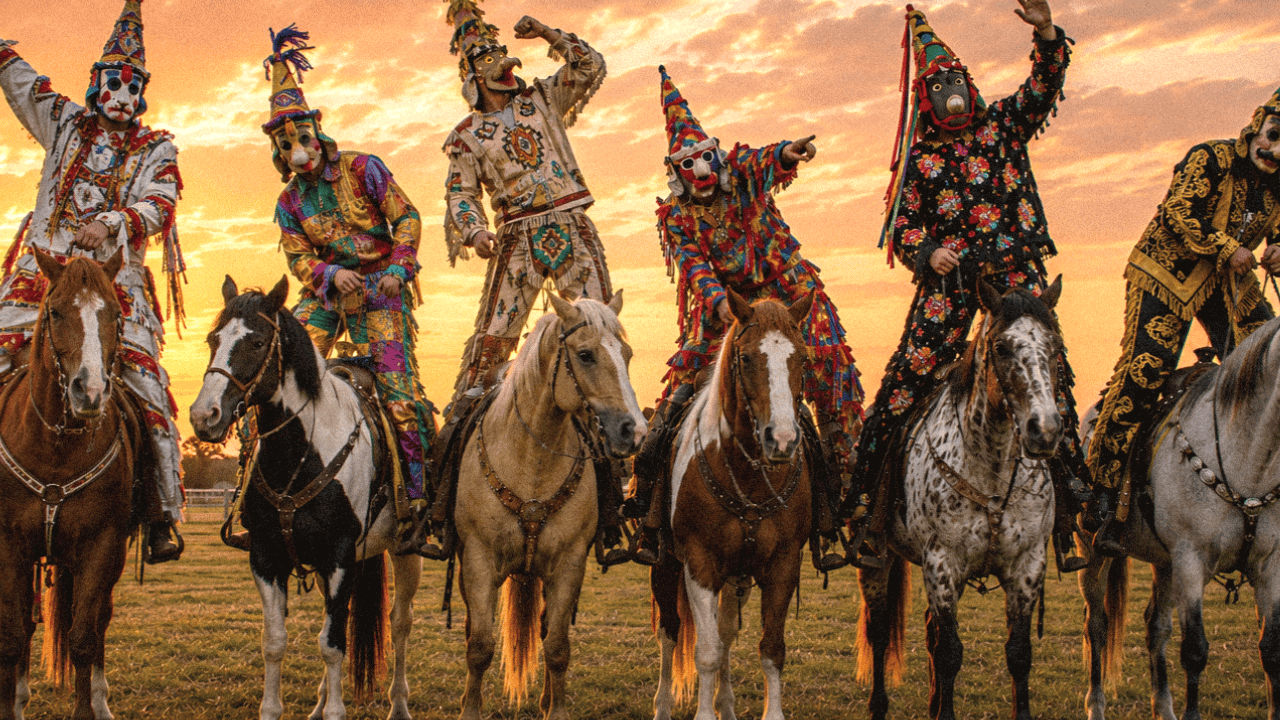
One of the most recognizable parts of Courir de Mardi Gras is the costume.
Participants wear colorful patchwork outfits covered in fringe and fabric scraps. Most also wear tall pointed hats called capuchons, which were originally designed to mock the fashions of European nobility.
Just as important are the masks. Wire-screen masks hide the identities of the runners and allow them to act foolish, playful, and carefree throughout the day.
Each costume is unique. In many families, costumes are repaired and reused year after year. As a result, worn patches and faded fabric often tell stories of previous runs and generations of celebration.
Chasing Chickens and Visiting Country Homes
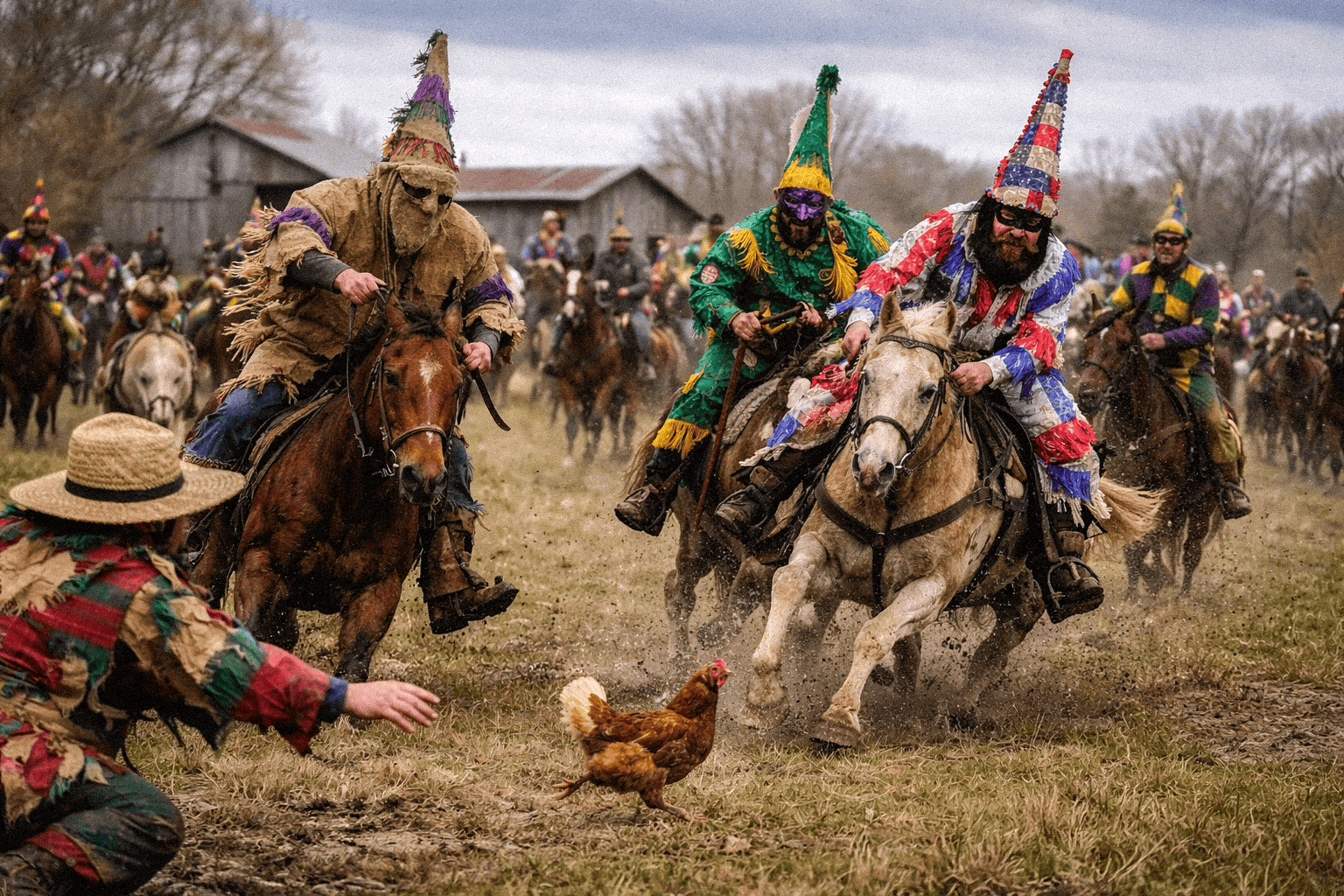
As the runners travel through the countryside, they stop at homes and farms along the route. At each stop, homeowners donate ingredients such as rice, sausage, onions, and vegetables for the community gumbo.
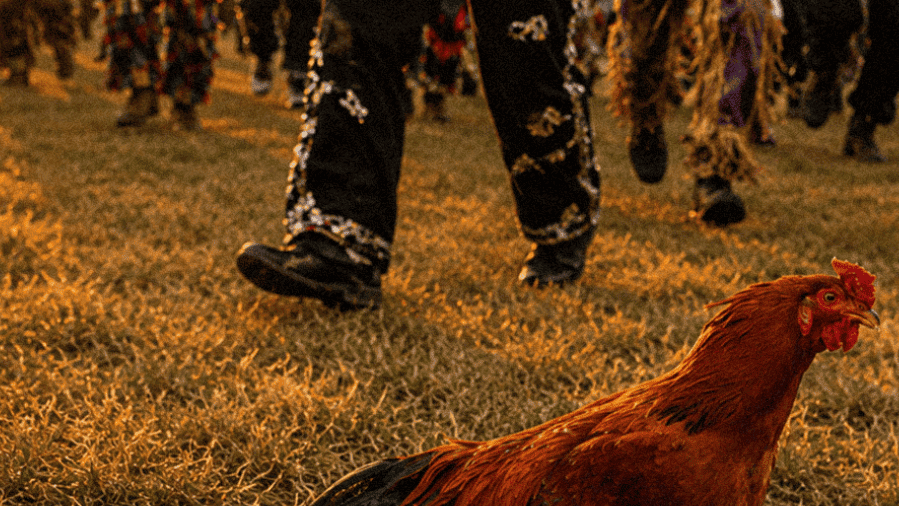
Most famously, some homeowners toss live chickens into the yard.
At that point, the chase begins.
Runners stumble, dive, and scramble through fields trying to catch the birds while spectators cheer and laugh. While the tradition appears chaotic, it symbolizes community participation and generosity. Every household contributes something to the final meal.
Meanwhile, Cajun music fills the air. Accordions and fiddles accompany dancing, singing, and celebration as the Courir moves from one stop to the next.
The Gumbo That Brings Everyone Together
By late afternoon, the run comes to an end.
At that point, the community gathers to prepare a large gumbo using the ingredients collected throughout the day. This meal serves as the heart of the celebration.
More importantly, the gumbo represents the spirit of the Courir itself. Every family, homeowner, and participant contributes something. Together, they create a meal that reflects cooperation, tradition, and community.
Before the quiet season of Lent begins, everyone gathers one last time to celebrate together.
Where to Experience Courir de Mardi Gras
Several Louisiana communities continue to host traditional Courir de Mardi Gras celebrations each year.
Some of the best-known runs take place in:
- Eunice
- Mamou
- Tee Mamou
- Church Point
- Basile
While some events welcome visitors, others remain private community traditions. Therefore, visitors should always respect local customs and follow event guidelines.
Each town puts its own spin on the celebration, but the spirit remains the same.
Why Courir de Mardi Gras Matters
Courir de Mardi Gras is much more than a festival.
It preserves centuries of Cajun history, language, music, and community traditions. At the same time, it offers a glimpse into a side of Louisiana that many visitors never experience.
Unlike commercialized celebrations, the Courir remains deeply personal. Families pass it down through generations, and communities continue to protect its authenticity.
As a result, it remains one of Louisiana’s most important cultural traditions.
Frequently Asked Questions
What does Courir de Mardi Gras mean?
Courir de Mardi Gras roughly translates to “Fat Tuesday Run” and refers to the traditional Cajun Mardi Gras celebration held in rural Louisiana communities.
Where did Courir de Mardi Gras originate?
The tradition originated in medieval France and was brought to Louisiana by Acadian settlers during the 1700s.
Why do participants wear masks?
Masks hide identities and allow participants to act playfully and freely during the celebration while honoring longstanding traditions.
Why do runners chase chickens?
Chicken chasing symbolizes community participation and the collection of ingredients for the communal gumbo prepared later in the day.
Where can visitors experience Courir de Mardi Gras?
Public celebrations are commonly held in towns such as Eunice, Mamou, Church Point, and Basile.
Related Articles
History of Cajun, Zydeco, and Jazz Music in Louisiana
Discover the sounds that provide the soundtrack for many Louisiana celebrations and traditions.
The Best Louisiana Festivals and Events
Explore the major festivals and hidden gems that showcase Louisiana culture throughout the year.
What Is the Holy Trinity in Louisiana Cooking?
Learn about the foundation of many Cajun and Creole dishes, including gumbo.
History of Gumbo in Louisiana
Explore the origins and cultural significance of Louisiana’s most iconic dish.
Final Thoughts
Courir de Mardi Gras captures the heart of rural Louisiana. It combines history, music, food, humor, and community into a celebration unlike any other. While Mardi Gras in New Orleans attracts worldwide attention, the Courir offers something equally special—a direct connection to Louisiana’s Cajun roots.
Whether you’re watching riders chase chickens, listening to Cajun music, or sharing a bowl of gumbo with locals, you’ll quickly understand why this tradition has survived for generations. In Louisiana, history isn’t just remembered—it continues to live, dance, and celebrate every Mardi Gras season.