What Is the Holy Trinity? The Foundation of Louisiana Cooking
The Holy Trinity is the foundation of Louisiana cooking and one of the most important flavor bases in Cajun and Creole cuisine. Made from a simple combination of onions, bell peppers, and celery, the Holy Trinity serves as the starting point for countless Louisiana dishes, including gumbo, jambalaya, étouffée, red beans and rice, and crawfish recipes. Similar to the French mirepoix, Louisiana’s version replaces carrots with bell peppers, creating the distinct flavor profile that has become synonymous with the state’s rich culinary heritage.
In this guide, you’ll learn what the Holy Trinity is, where it originated, how it became a cornerstone of Louisiana cooking, and the best ways to use it in your favorite Cajun and Creole recipes. Whether you’re new to Louisiana cuisine or looking to improve your cooking skills, understanding the Holy Trinity is essential to creating authentic Louisiana flavors in your own kitchen.
What Is the Holy Trinity in Louisiana Cooking?
Every great Louisiana dish starts somewhere. More often than not, it starts with the Holy Trinity.
The Holy Trinity is the flavor foundation of Cajun and Creole cooking. From gumbo and jambalaya to étouffée and red beans, this simple blend of vegetables creates the depth and character that define Louisiana cuisine.
While the ingredients are simple, their impact is enormous. In fact, mastering the Trinity is one of the first steps toward cooking authentic Louisiana food.
What Is the Holy Trinity?
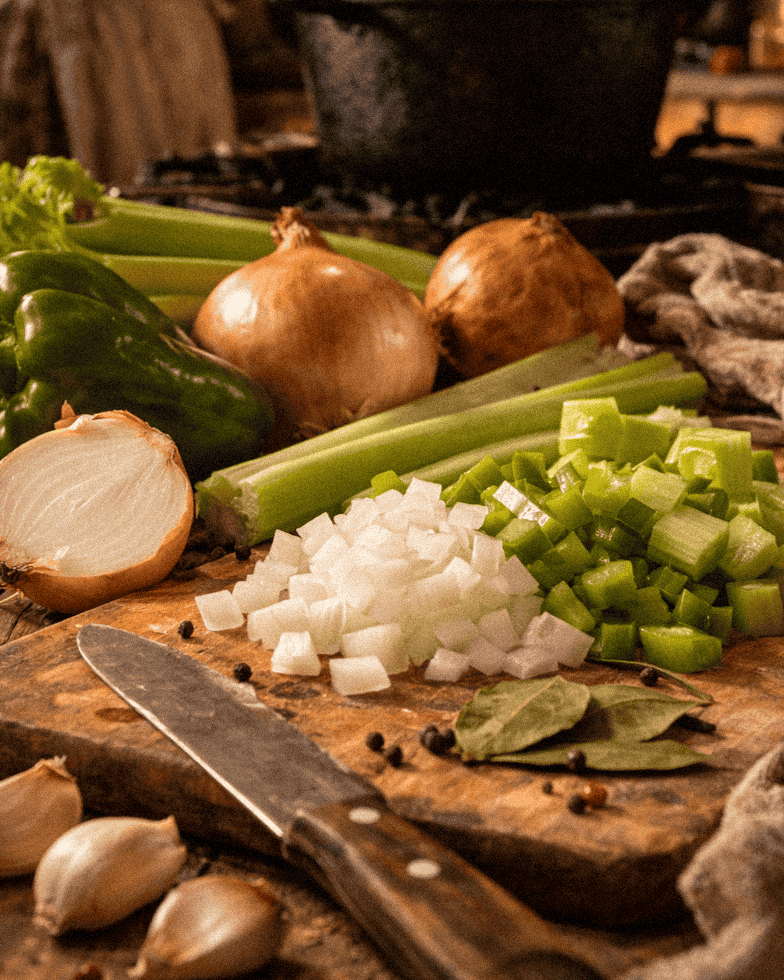
The Holy Trinity consists of three vegetables:
- Onion
- Bell pepper
- Celery
Louisiana cooks dice these vegetables and sauté them together to build flavor at the beginning of a recipe.
The Trinity evolved from the French mirepoix, which traditionally uses onion, carrot, and celery. However, when French settlers arrived in Louisiana, bell peppers were easier to find than carrots. Over time, the substitution became a defining part of Cajun and Creole cooking.
Today, the Trinity serves as the backbone of countless Louisiana dishes.
Why the Trinity Is So Important
Each ingredient contributes something different to the final dish.
- Onion adds sweetness and depth
- Bell pepper provides brightness and balance
- Celery contributes earthiness and aroma
Together, they create a flavor base that supports everything added afterward.
Without the Trinity, gumbo loses depth. Likewise, jambalaya tastes flatter and gravies lack complexity. That’s why Louisiana cooks rarely skip this step.
How to Use the Trinity Properly
Using the right technique is just as important as using the right ingredients.
Dice Evenly
Cut the vegetables into similar-sized pieces so they cook evenly.
Most Louisiana cooks prefer a small dice, especially for gumbo, gravies, and smothered dishes.
Add It at the Right Time
Different dishes call for different approaches.
- Gumbo: Add the Trinity directly to the hot roux
- Jambalaya: Sauté before adding meat and rice
- Red Beans: Cook before adding beans and liquid
- Smothered Dishes: Add after browning the meat
Each method helps build layers of flavor.
Cook Until Tender
The goal is to soften the vegetables, not heavily brown them.
As they cook, natural sugars develop and the vegetables become sweeter and more aromatic.
Common Louisiana Dishes That Use the Trinity
The Holy Trinity appears in many of Louisiana’s most famous recipes.
- Gumbo
- Jambalaya
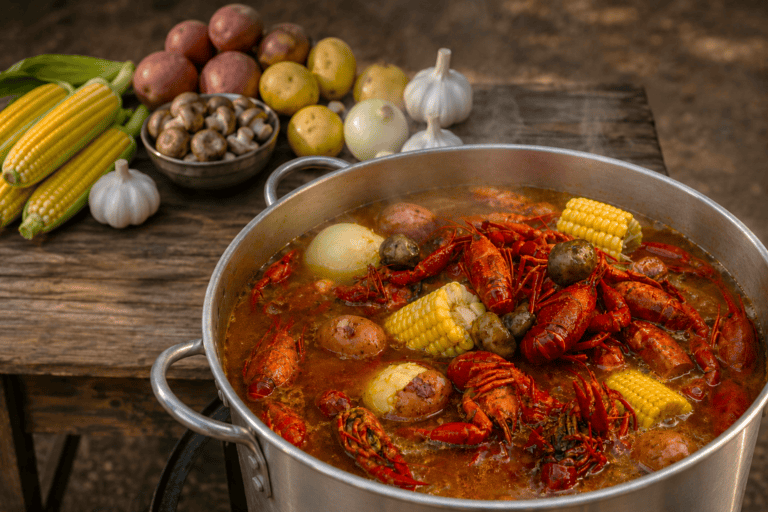
- Crawfish Étouffée
- Red Beans and Rice
- Crawfish Pie
- Smothered Pork Chops
- Smothered Green Beans
- Rice and Gravy
If you’re cooking Cajun or Creole food, chances are you’re using the Trinity.
Popular Variations of the Trinity
Like most Louisiana traditions, every family has its own variation.
The Trinity and Garlic
Many cooks add garlic shortly after the vegetables soften.
Although garlic is not officially part of the Trinity, it appears in countless Louisiana recipes.
The Trinity and Green Onions
Green onions add freshness and are commonly included in many Cajun dishes.
Creole Additions
Creole recipes often include tomatoes along with the Trinity, especially in New Orleans cooking.
The “Pope”
Some Louisiana cooks jokingly refer to garlic as “the Pope.”
The joke suggests that once garlic joins the Trinity, the hierarchy is complete.
Proper Trinity Ratios
Most Louisiana cooks follow a simple ratio:
- 2 parts onion
- 1 part bell pepper
- 1 part celery
The extra onion provides sweetness and helps create a richer flavor base.
However, many cooks adjust the ratio to suit their preferences. Some use more bell pepper, while others prefer extra celery.
Common Mistakes to Avoid
Even a simple ingredient blend can cause problems when handled incorrectly.
Avoid these common mistakes:
- Adding the Trinity too late
- Not cooking it long enough
- Cutting pieces too large
- Overcooking until mushy
- Skipping it entirely
Small mistakes can reduce the depth and balance of the final dish.
Why the Holy Trinity Defines Louisiana Cooking
The Holy Trinity represents Louisiana’s ability to take old traditions and make them uniquely local.
French cooking techniques provided the foundation. Louisiana ingredients created something entirely new. As a result, the Trinity became one of the most recognizable flavor bases in Southern cooking.
From Cajun kitchens in Acadiana to Creole restaurants in New Orleans, the Trinity remains where flavor begins.
Frequently Asked Questions
What vegetables make up the Holy Trinity?
The Holy Trinity consists of onion, bell pepper, and celery.
Why is it called the Holy Trinity?
The name reflects the importance of the three ingredients in Cajun and Creole cooking, much like the French mirepoix serves as a foundation in French cuisine.
Is garlic part of the Holy Trinity?
No. However, many Louisiana cooks add garlic immediately after the Trinity softens.
What is the difference between mirepoix and the Holy Trinity?
French mirepoix uses onion, carrot, and celery. Louisiana’s Holy Trinity replaces carrots with bell peppers.
What dishes use the Holy Trinity?
Gumbo, jambalaya, étouffée, red beans and rice, crawfish pie, and countless other Cajun and Creole dishes rely on the Trinity.
Related Articles
The Art of Making a Louisiana Roux — Learn how to create the rich, flavorful roux that serves as the backbone of gumbo and many Cajun dishes.
History of Gumbo in Louisiana — Explore the cultural influences and traditions that helped create Louisiana’s most famous stew.
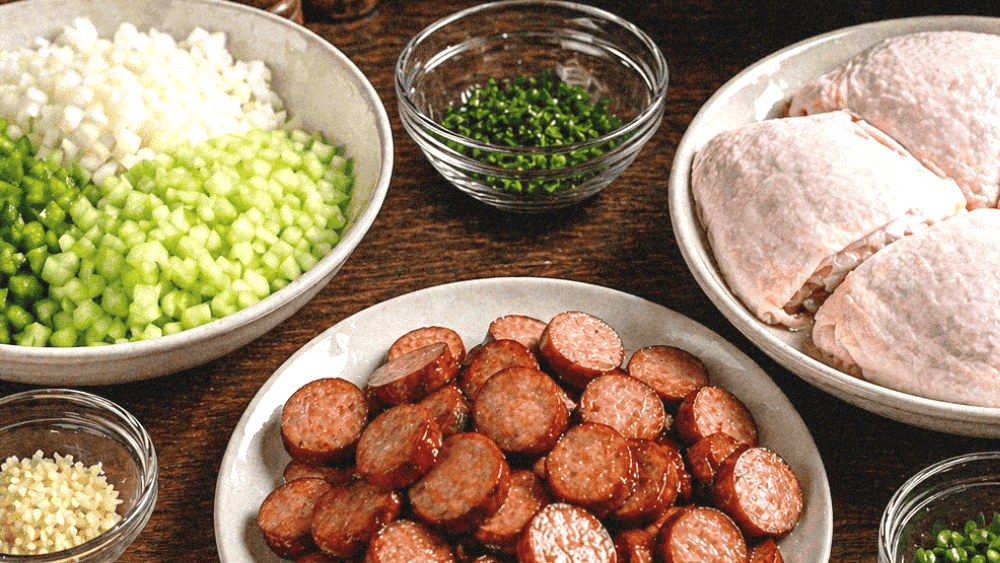
Louisiana Chicken and Sausage Gumbo Recipe — Put the Holy Trinity to work in one of the state’s most iconic recipes.
Louisiana Crawfish Étouffée Recipe — Discover how the Trinity creates the flavor base for this classic South Louisiana dish.
Guide to Making Homemade Stocks — Learn how homemade stock and the Holy Trinity work together to build deeper flavor.
Final Thoughts
The Holy Trinity may be simple, but it remains one of the most important building blocks in Louisiana cooking.
By combining onion, bell pepper, and celery, Louisiana cooks create the foundation for gumbo, jambalaya, étouffée, and countless other dishes. Mastering this simple technique will immediately improve your Cajun and Creole cooking.
At From The Parish, we believe the best Louisiana food starts with tradition—and few traditions are more important than the Holy Trinity.